
Opening Reception: Saturday, August 1, 5-7pm
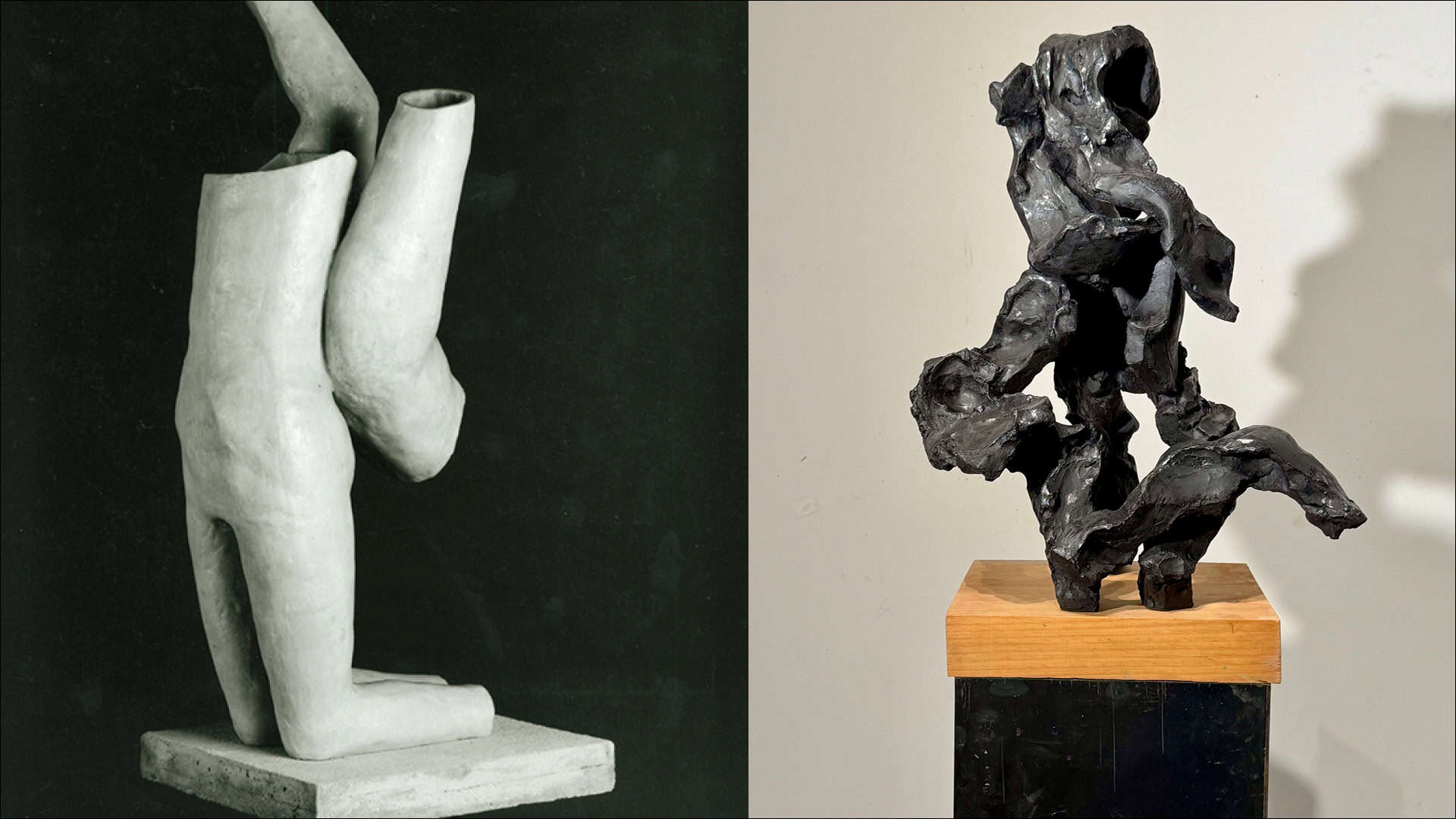
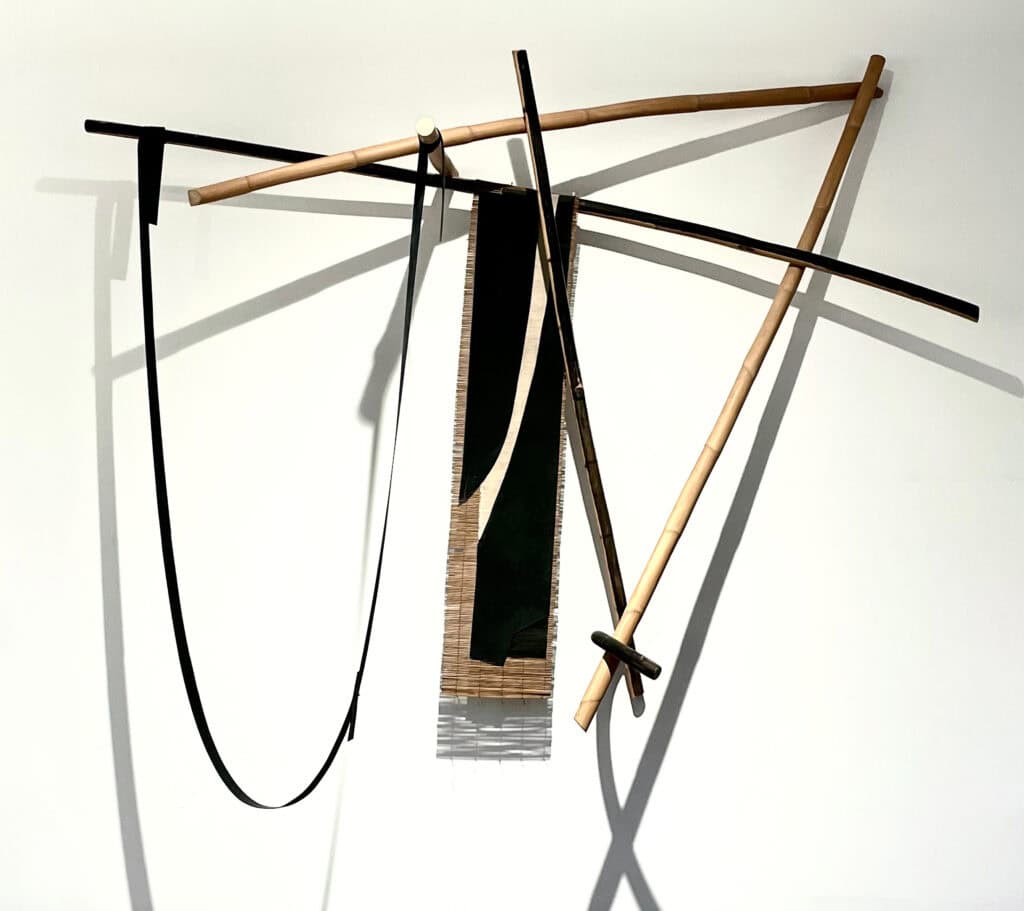
Across my practice, the human figure emerges not as a stable form but as a condition shaped by tension, imbalance, and material pressure. In the early rattan and rubber works, the body is reduced to line and suspension: flexible rods, elastic curves, and woven elements diagram forces rather than anatomy. The figure exists provisionally, held together by counterweight and gravity, already refusing monumentality or wholeness.
In the later Homo Barro sculptures, this suspended body collapses into mass. Line gives way to density; tension becomes compression. Voids, abrasions, and excess matter articulate a figure burdened by its own materiality, standing less through will than persistence. The symbolic gesture of Deicide is enacted not as negation but as structural failure: transcendence dissolves, leaving the body to absorb its weight. Together, these works trace a continuum—from precarious balance to corporeal overload—where form survives not through resolution, but endurance.
Educated at St Martin’s and Otis, Bruce Edelstein is a multidisciplinary artist whose work spans Los Angeles, New York, and Latin America. His practice has evolved from rubber and rattan sculptures to expressive, life-sized figures in bronze and wax.
Inspired by travels to Mexico and Colombia, his recent work integrates terracotta, encaustic, and architectural forms. Beyond his studio, Edelstein is an acclaimed educator, recognized in Dezeen for his innovative sculpture curriculum for children. His diverse portfolio explores themes of landscape, human subjectivity, and social unrest.
Throughout his career, Bruce Edelstein has maintained a dynamic presence on the international stage, bridging the gap between traditional craft and contemporary sculpture. He has shown in gallerias and museums such as the Sculpture Center and Denise Cade Gallery in New York, where he spent over a decade debuting his evocative, life-sized figures in wax and bronze. His creative journey has frequently taken him abroad, leading to major exhibitions at the Museo de los Oaxaqueños in Mexico, featuring his terracotta forms and social-commentary tapestries—and more recently at Galleria Sextante in Bogotá, Colombia. Beyond traditional gallery walls, his versatility is evident in his stage set designs for the experimental dance company The Moving Earth and his site-specific material research at the Chircal ceramic factories. This global exhibition history reflects a lifelong commitment to exploring the human condition through diverse landscapes and mediums.